Podiatry, also known as podiatry therapy, refers to a method in which people pre-check certain diseases through observation and massage of specific areas of the feet, and at the same time carry out health care conditioning. It is commonly known as “touching the feet to diagnose diseases” and “pressing the feet to treat diseases”.
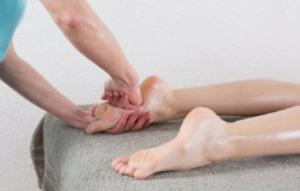
Foot diagnosis and treatment are mainly used to massage this directly with bare hands. The pads of the fingers are the most sensitive to touch, and can touch positive objects such as nodules and papules of various shapes and sizes. It can warm the patient when touched without excessive pain.
Foot contact incision diagnosis:
Palpation of the foot meridian points and acupoint areas can find abnormal tender points, swelling, stripes and nodules, indicating that there are lesions in the corresponding organs. In addition, if you notice cold feet, you should consider whether there are other underlying diseases.
The meridians of the feet include the three yin of the foot, the three yang meridians of the foot, the chong meridian, the yin qiao, and the yang qiao meridian. The stomach meridian, bladder meridian, gallbladder meridian, liver meridian, spleen meridian, and pulse meridian all start or end at the toes; Yin and yang both start from the heel, and the kidney meridian is the only meridian that runs on the soles of the feet. Palpation along the meridian route can touch the “magic point” to infer the lesions of the meridians and organs.
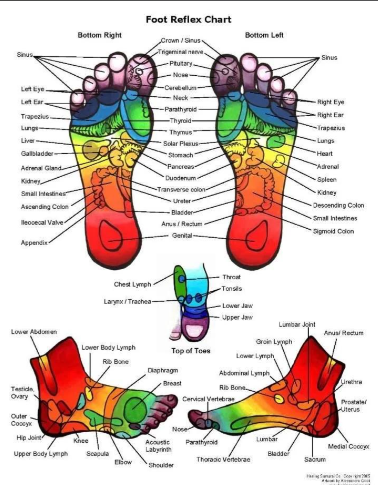
Stimulates the gonads, bladder meridian, kidney meridian, yin and yang meridians.
Grasp the Achilles tendon
Pain in this area indicates that some or several organs are dysfunctional in the gonads, bladder meridian, kidney meridian or tarsal vein and their organs.
Hold your heels
Probe with your fingers pressing deeply (buried into the muscle) on this area. If it is painful, it indicates gonadal dysfunction (abnormal). This method can also eliminate back pain and knee stiffness while improving sexual function.
Quickly move each toe up and down with your hands
Stimulation begins and ends in the meridians of the toes. If it is pain, it indicates that the function of the meridians and their organs is imbalanced.
Pinch both sides of your big toe
Twisting the big toe can stimulate the liver meridian and spleen meridian at the same time, and press deeply on the back of the right foot – between the bones – just behind the bone.
Grasp the base of the toe
Diagnose and eliminate sinus and eye diseases. Grab your toes and move them up and down to enhance reflexes, and pat the soles of your feet for general stimulation.
Yongquan point of the kidney meridian
Find out the reflex area of the kidney, the Yongquan point of the kidney meridian, and the position of the left and right feet is the same, which can detect the body’s kidney function and body strength.
Detect the pathological deformation of human organs by detecting the pathological deformation of human organs by detecting the tender points of the foot (also known as sensitive points, “magic points”), small nodules and small papules, small lumps and cords.
Positive reactants such as small nodules, small lumps, small papules, and cords can also be found through palpation, and are often accompanied by abnormal tenderness. This indicates the abnormal reaction of the foot acupoint, and also reflects the function or organic lesion of the corresponding body. Therefore, we must carefully experience and touch and explore.
The process of massage is the purification process of the body, which releases toxins and accumulated waste products and drains them into the bloodstream, which are excreted from the biliary tract by the kidneys and sweat glands or through the liver, or from urination through the bladder.
Basic techniques of foot massage:
The basic technique of foot massage is the basis for the development of “Tuina” technique, which is a relatively simple and original massage technique. The “Yellow Emperor’s Inner Canon” records that “in ancient times, medicine had a stumbling block”. Its stumbling refers to the ancient “foot touching doctor”, that is, the foot massage doctor. Therefore, the earliest basic massage technique should be the first to promote the foot massage method, which requires strength, long-lasting, uniform and deep.
Compression method
Use the pads of the thumb, index and middle fingers and their knuckles to perform long-lasting and uniform pressure on specific foot points, and the force is from small to large.
It is often used in the foot points of the five organs and the spine, such as the heart, liver, spleen, lungs, kidneys, cervical spine, thoracic spine, lumbar spine, etc.
Press the kneading method
Use the pads of the thumb, food, and middle fingers to gently rotate and knead in the plantar acupoint area, which can play a role in activating blood circulation and dispersing knots, softening and firming pain, and coordinating the yin and yang of the internal organs.
Push and rub method
Use the pads of the thumb, index and middle fingers and their knuckles to push and rub the toes in one direction or back and forth to the specific acupoint area. It plays a role in dredging qi and blood, dispersing stagnation and relieving depression.
It is suitable for massage between two acupoints and relaxation of the whole sole and instep of the foot, such as from the kidney point to the ureteral point, the bladder and colon acupuncture points.
Tap method
The first is the index finger or middle finger tapping method: using the thumb, index finger, and middle fingers to work together, the two finger trees of the thumb and index finger are opposite, the middle finger pad is pressed on the index finger, the three fingers are pinched, the index finger is protruding, or the thumb and middle finger pads are opposite, the index finger pad is pressed on the middle finger, the three fingers are pinched, the middle finger is protruding, and the wrist elasticity is like a sparrow’s pecking point tapping method.
The second is the finger tapping method: the fingers are slightly bent, the five fingers are claw-shaped, forming a plum blossom shape, and the wrist is elastic up and down to perform the point tapping method. It can play a role in invigorating the yang, coordinating qi and blood, dispelling evil and supporting righteousness.
It is suitable for acupoint areas with hard heels and less muscles, such as heel pain caused by bone hyperplasia and synovitis in the heel, and the application of the tapping method is very effective, and sometimes the pain can disappear after two or three taps.
Kneading method
Pinch the thumb and index finger on the two acupoints at the same time, or press the thumb on one acupoint and the index finger plays a fixed role on the side or back.
It can play a role in clearing the blood circulation and invigorating the mind. It is suitable for the lower lymph glands, acupoints on both toes, etc.
Grip method
Grasp the other four fingers except the thumb on several acupuncture points, and press the four fingers hard at the same time. This technique is suitable for when there are positive signs of the thoracic spine, lumbar spine and sacrum at the same time, or when there are lesions in the eyes, nose and other acupoint areas when the palmar side of several toes is observed.
It can play a role in relieving heat and opening the orifice and increasing the spirit. This method is often used as a self-care massage.
Shaking method
It is held or held with both hands before and after the joints that should be shaken, and then passively shaken to assist the patient’s limbs to restore functional activities. It plays a role in dredging pores, smoothing joints, and harmonizing qi and blood
It is often used for joint relaxation activities after pedicure, shaking of each toe joint and ankle joint. Pay attention to the use of one hand to fix the joint to be shaken when shaking, and the toe joint should be protected to prevent injury.
Extension method
It is a pulling and stretching exercise for the toe joint and ankle joint. It is divided into “toe pulling method” and “ankle pulling method”. The “toe pulling” method refers to holding the proximal end of the toe joint with one hand, holding its distal end with the other hand, and then performing passive flexion and extension of the toe joint. The “ankle pulling method” is to hold the patient’s ankle with one hand and hold the metatarsal part of the metatarsal part with the other hand for flexion and extension activities, which can play a role in unblocking the qi and blood of the whole body
It is often used for joint relaxation activities after pedicure, often in conjunction with the shaking method.
Precautions for foot massage:
Thorough preparation must be done before the massage
The surgeon should cut off the nails, maintain the temperature of the hands, and keep the treatment room well ventilated, the temperature moderate, and the light should be soft and quiet. Prepare plastic bags, towels, and skin care grease to avoid cross-infection and to protect the skin.
Properly master the stimulation force and time
One of the major drawbacks of foot diagnosis and treatment is that it is painful during conditioning, and only pain is effective. Therefore, it must vary from person to person, and the strength must be light and then heavy, uniform and soft, long-lasting and powerful.
Massage should not be done if you are full, overworked, or drink too much
Women should not massage during pregnancy and menstruation.
Severe patients should not massage for more than 10 minutes per session
Patients with severe epilepsy, heart disease, hypertension, abnormal liver function and various acute and critical illnesses should be treated with drugs.
Massage conditioning sequence
Generally, massage the kidneys → ureters → bladder for about 5 minutes first, and then massage other symptomatic foot points.
The rectum cannot be pressed smoothly from the anus
When massaging the large and small intestines, rectum, and anus, the rectum cannot be pressed from the rectum to the anus, and must be massaged from the anus → the rectum in the opposite direction to avoid anal prolapse.
The patient must be given water before or half an hour after the massage
More than 500mL (patients with severe kidney disease should not drink more than 150mL). It is best to urinate once within an hour after conditioning.
Special reactions that occur after massage:
01\After massage, patients with severe kidney disease may urinate black or red in a short period of time, which is a phenomenon of clearing and detoxifying, and it can continue to be massaged, and it will naturally return to normal.
02\Some patients with back pain will feel more pain in the back after massage, but after a day of pain, the pain will be greatly reduced. This is due to the smooth flow of blood and the dredging of meridians after massage.
03\After varicose vein massage, the veins will be significantly thickened, which is also a good sign, which is the effect of activating blood circulation and dissolving blood stasis, and introducing new things.
04\Some people have swelling in their ankles after massage, especially in patients with lymphatic reflux disorders, which is a normal reaction.
05\Sleep increases, patients feel sleepy and thirsty during conditioning, sleep deepens at night, and sometimes dreaminess. This indicates a state of “protective inhibition” in which the patient’s physiological functions self-adjust.
06\increased perspiration, sometimes accompanied by a foul odor; increased urination and peculiar odor, if the urine is left alone, there may be obvious sediment; The frequency of stool and exhaust increases, and the odor increases.
07\Increased discharge from the nasal mucosa, eyes, trachea appears.
08\Female patients have vaginal discharge, or original vaginal discharge, which is now increased in amount and produces odor.
09\Thirst appears, water intake increases.
These phenomena are normal reactions during the conditioning process, suggesting that the patient’s metabolism is enhanced and waste products are excreted.