1. Vajra seat
Liu Yang, an attending physician in the Department of Tuina Physiotherapy of Oriental Hospital of Beijing University of Traditional Chinese Medicine, pointed out in an article in the CCTV Life Circle in 2024 that Vajra sitting is a simple and effective health guidance technique. Vajra sitting stimulates the meridians and acupuncture points through movements, directs qi and blood to the lower body, and achieves the effects of “nourishing qi” and “nourishing blood”.
When kneeling, it can help stimulate the body’s stomach meridian, spleen meridian and liver meridian, so that it is unobstructed, so as to harmonize the spleen and stomach and consolidate the foundation.
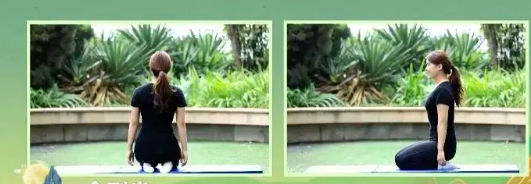
Correct posture for Vajra sitting:
1. Sit on the ground or mat with your knees together, with your heels together. If the heels cannot be well together, the heels can be separated to the sides.
2. Then slowly sit on your heels and find a more comfortable state, but don’t put your whole body weight directly on your heels.
3. Finally, slowly let your spine stretch upwards with your hands naturally on your thighs.
2. Tiptoe
In our daily life, there is a simple and practical health regimen – tiptoeing. By stimulating the meridians of the feet, tiptoes can promote the circulation of qi and blood throughout the body and achieve the effect of strengthening the body
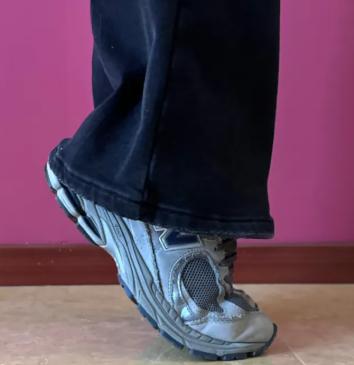
Traditional Chinese medicine theory believes that the feet are the “second heart” of the human body. From the toes to the calves and inner thighs, the spleen meridian, liver meridian and kidney meridian run through, and these three meridians are collectively called the three yin meridians of the foot. Tiptoe movements can directly stimulate these meridians, promote the upward circulation of qi and blood, warm the internal organs, invigorate the middle qi, and help improve the vitality of life.
Correct posture for tiptoes:
Stand with your legs naturally on your feet and your arms on either side of your body, and then push your heels up vigorously.
The arms can also move naturally, such as palms down and arms raised forward. This position can be maintained to the point where you are doing your best, and then you can stand up and take a short break.
Do it once a day, and it is best to stick to it for more than 10 minutes each time.
3. Return to the sun
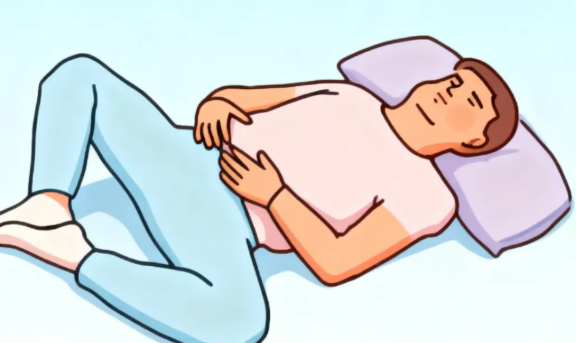
Liu Yanyan, an attending Chinese medicine physician in the Department of Traditional Chinese Medicine of the Third People’s Hospital of Dalian City, Liaoning Province, published an article on her hospital’s WeChat official account in 2024 that lying down is a traditional traditional Chinese medicine practice before going to bed, which aims to achieve the purpose of tonifying the liver and kidneys, clearing meridians, calming the mind and promoting sleep through specific postures.
It is especially suitable for sleep problems such as difficulty falling asleep and shallow sleep caused by kidney deficiency, heart fire, and excessive liver fire, as well as back pain, lower limb weakness, and cold hands and feet.
The correct posture for lying down:
After lying down naturally, the soles of the feet are pressed together, and the hip joints on both sides are relaxed and abducted to both sides; Place your hands on your lower abdomen or in your groin.
It is generally recommended to do it before going to bed, ranging from 10~30 minutes according to the ability time.
4. Golden Rooster Independence
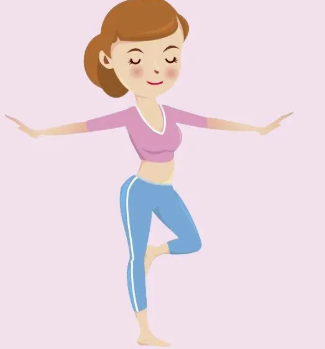
Golden Rooster independence not only exercises the feet, but also stimulates the meridians.
Li Jing, deputy chief physician of the Preventive Disease Treatment Center of Nanjing Hospital of Integrated Traditional Chinese and Western Medicine, once pointed out in a health newspaper article that the independent fitness method of the golden rooster can lead to blood downward. Because standing on one leg, the body’s qi and blood will be directed to the soles of the feet, and there are six important meridians on the human feet passing through, and the stimulation and regulation of the foot meridians are achieved after standing, and the meridians are exercised, so the corresponding organs of the meridians and the parts it follows are also adjusted accordingly.
At the same time, practicing “Golden Rooster Independence” is good for balancing blood pressure and blood lipids. It can also make people’s hearts no longer scattered and irritable, and achieve the purpose of concentrating their thoughts and nourishing their minds and calming their minds.
Correct posture for the independence of the golden rooster:
The Golden Rooster Independent Fitness Method is very simple, you only need to relax your whole body, close your eyes slightly, put your hands on your sides naturally, and then lift one foot arbitrarily and try to stand for a few minutes.
The key to standing is not to open your eyes, and at the same time you must concentrate all your strength and mind on the soles of your feet. ④
5. Stand piles
The action of standing on the pile seems simple, but it is actually a good action for the whole body. Chai Yunlong, a teacher at the Department of Physical Education and Research of Peking University, published an article on the WeChat official account of the CCTV Life Circle in 2025 pointing out that standing piles are an ancient and effective health preservation method that can help the human body regulate qi and blood, replenish vitality, and consolidate yang qi.
Standing piles seem to be motionless, but in fact, during exercise, they can help regulate the qi of the human body’s meridians, allowing them to effectively run the whole body and achieve the effect of regulating the internal organs. Therefore, there is a saying: “The standing pile seems to be immovable, but in fact the internal organs are moving”.
orrect posture for standing piles:
The whole body is relaxed, the jaw is recycled, the hundred will go up, and the ethereal spirit is strong;
Bend your knees and loosen your hips, lift your left foot, step sideways, pay attention to the toes falling first, transition to the whole foot, the center of gravity is in the middle of the body, and stand shoulder-width apart;
Open your hands slightly, rotate forward from the side to the side, bend your knees and loosen your hips in front of your abdomen.